Home / Robotic Joint Replacement
Robotic Hip & Knee Replacement
Fellowship-trained in robotic joint replacement in Aberdeen, with further platform training on the Stryker Mako system and in the direct anterior approach to the hip. The operation is planned in three dimensions and carried out within defined limits.
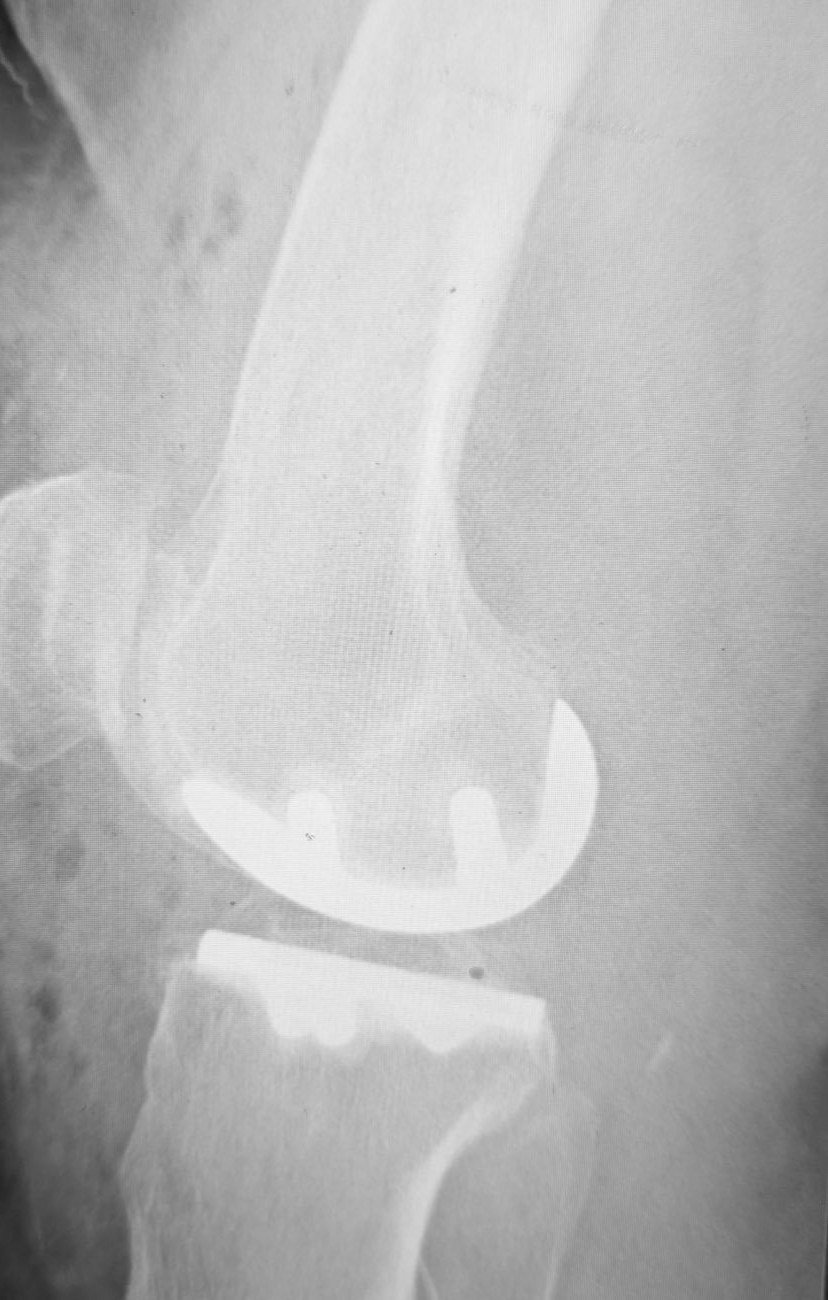
The robot does not perform the operation
This is the single most common misunderstanding, and it is worth clearing up first. The surgeon performs the operation. The robotic arm is a precision instrument under the surgeon’s direct control. It holds a defined boundary and will not cut outside it.
What changes is the planning. A CT scan of your joint is used to build a three-dimensional model of your own anatomy. The size, position and alignment of every component is planned on that model before the operation begins, and can be adjusted during surgery once the ligament tension is assessed in real time.
The intended benefit is consistency: implants placed closer to the plan, more often, with less variability between cases.
How a robotic joint replacement works
Four stages, from scan to recovery.
A CT scan of the affected joint is converted into a three-dimensional model of your specific anatomy.
Implant size, position and alignment are planned on that model before you come to theatre.
Once the joint is exposed, ligament balance is measured and the plan adjusted before any bone is cut.
The surgeon prepares the bone with the robotic arm constrained to the agreed boundary.
Joint replacement procedures offered
Robotic Total Knee Replacement
The whole knee joint surface is resurfaced. Robotic assistance is used to plan alignment and to balance the soft tissues through the full range of movement.
Robotic Partial Knee Replacement
Where arthritis is confined to one compartment, only that part is replaced, which preserves the ligaments and the rest of the joint.
Robotic Total Hip Replacement
Planning and placement of the socket and stem, with attention to leg length and offset, the two things that most affect how a new hip feels afterwards.
Conventional Hip & Knee Replacement
Robotic assistance is a tool, not a requirement. Well-executed conventional joint replacement remains an excellent operation and is the right choice for many patients.
Direct Anterior Hip Replacement
The hip is reached from the front, through the plane between muscles rather than by detaching them, which can allow fewer movement restrictions early on. Trained in the approach at the International Masters Anterior Approach course in Houston.
Avascular Necrosis of the Hip
Assessment and treatment of avascular necrosis, a condition seen relatively often in India, in which the blood supply to the femoral head fails.
What robotic assistance does, and what it does not
Robotic assistance reliably improves the accuracy of implant positioning. That is well established and is the reason to use it.
What is still being studied is how much that accuracy translates into a difference patients can feel ten or twenty years later. Long-term outcome data is accumulating but is not yet settled, and anyone who tells you otherwise is overselling.
What matters at least as much as the technology is the indication, the surgeon’s experience, the quality of your rehabilitation, and your general health going into the operation. A robot cannot compensate for an operation that should not have been done.
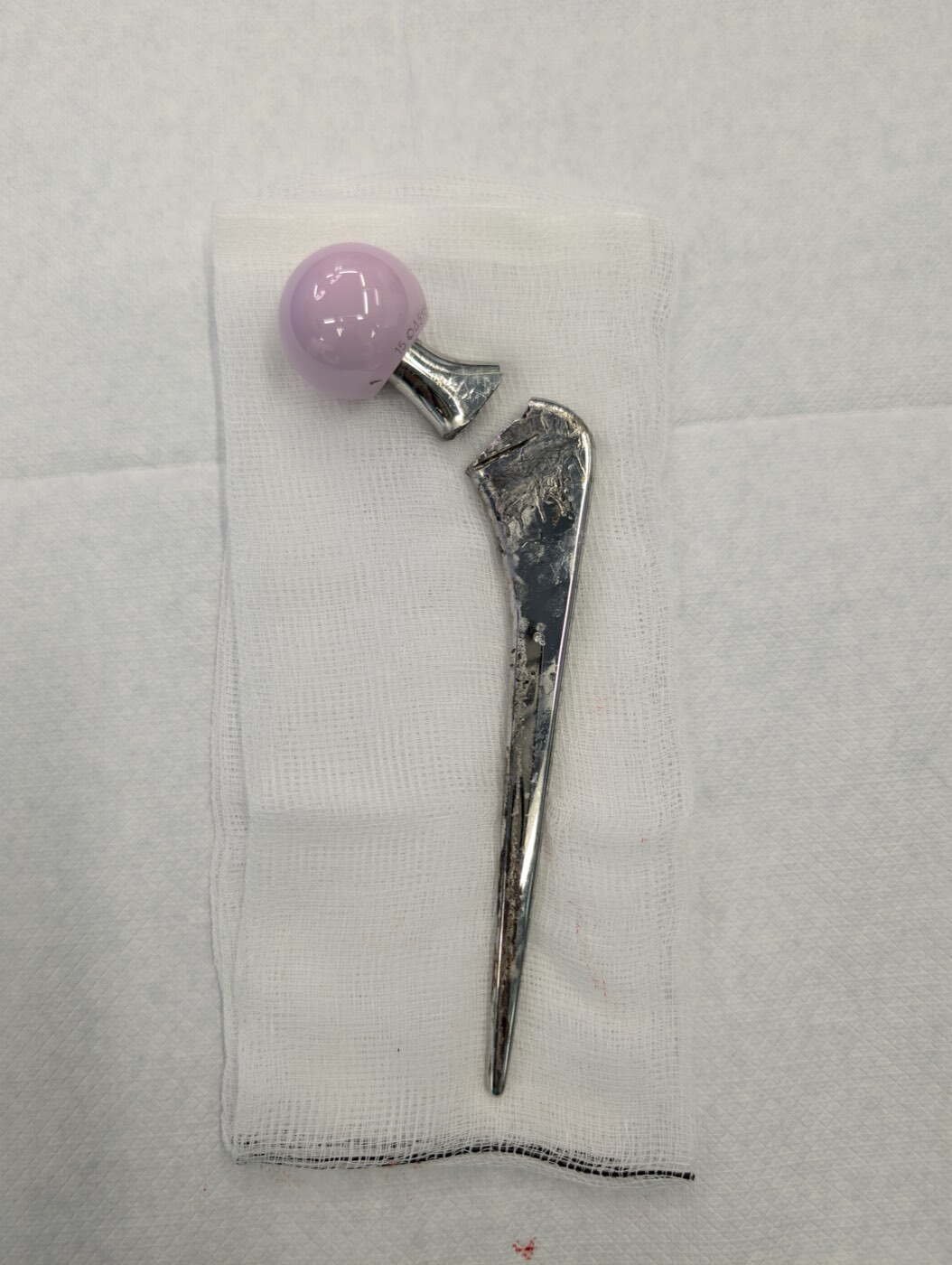
A cemented Exeter stem that fractured in service, removed at revision. Implants are not immortal, and planning for that is part of the job.
Robotic joint replacement FAQs
Robotic assistance improves the precision of implant placement, and it constrains the cutting instrument to a planned boundary. That is a meaningful safety feature. However, joint replacement carries the same fundamental risks either way: infection, clots, stiffness, and the possibility of needing further surgery. The technology reduces variability; it does not remove risk.
The honest answer is that we do not yet have the long-term data to say so definitively. Implant position is one of the factors known to influence how long a joint replacement lasts, and robotic assistance improves position, so the reasoning is sound. But claims of a guaranteed longer lifespan go beyond what the current evidence supports.
Most patients having a hip or knee replacement are mobilised on the same day or the day after surgery, and typically go home within two to four days. Partial knee replacement patients often go home sooner.
Walking with support begins within a day of surgery. Most patients are off walking aids somewhere between two and six weeks. Driving usually becomes possible once you can perform an emergency stop comfortably and are off strong painkillers, commonly around six weeks. These are averages rather than promises.
Only if the arthritis is genuinely confined to one compartment of the knee, the ligaments are intact and the deformity is correctable. Roughly a quarter of patients with knee arthritis meet those criteria.
Yes. The planning CT is what the three-dimensional model is built from, so it is done before the operation is scheduled. It involves a low radiation dose and takes only a few minutes.
There is usually an additional cost associated with robotic assistance, which varies by hospital and by the implant used. Fees and package costs are available on request, and will be explained in full before anything is scheduled.
It is a way of reaching the hip from the front, working in the natural plane between muscles instead of detaching them. For suitable patients that can mean less early discomfort and fewer restrictions on movement afterwards. It is not right for every hip — body shape, the pattern of arthritis and any previous surgery all influence the decision, and by a year most patients do well whichever approach is used.
Discuss whether joint replacement is right for you
Not every painful knee or hip needs replacing, and not every replacement needs a robot. A consultation will establish which applies to you.