Home / Research
Research, Publications & Teaching
Peer-reviewed work spanning implant infection, hip fracture care and complex revision arthroplasty, alongside national audit collaboration and the teaching of surgical trainees.
Selected publications
Salvage Total Hip Replacement for Failed Proximal Femoral Fracture Fixation
A retrospective review of 71 complex salvage arthroplasties performed over sixteen years, combined with a scoping review of the literature. The study argues that salvage hip arthroplasty differs materially from primary replacement in surgical time, complication rate and rehabilitation burden, and should therefore be categorised and studied separately within the National Joint Registry.
Habib Z, Malik A, Moran M, Rasool MU, Arifuzaman M, Ahmed A, Mohan R.
Cureus 2024;16(11):e74613. doi:10.7759/cureus.74613
Perioperative Tranexamic Acid in Hip Fracture Surgery: The PATHS Study
A UK-wide multicentre prospective national audit of tranexamic acid administration in neck of femur fracture surgery, gathering data on 917 patients across 66 institutions. It found wide variation in practice. Only 48% of eligible patients received tranexamic acid, and rates ranged from 0% to 100% between hospitals. The study recommended a standard perioperative protocol.
Berg AJ, Naylor T, Johnson DS; The PATHS Study Collaborators (including Aditya Malik, North Manchester General Hospital).
Ann R Coll Surg Engl 2023;105:142–149. doi:10.1308/rcsann.2021.0273
Bacteriophage Therapy of Methicillin-Resistant Staphylococcus Aureus
An experimental study of bacteriophage therapy against MRSA biofilms formed on orthopaedic implant material. Where untreated controls showed persistent infection, the phage-treated group demonstrated clearance of infection with sterile implant retrieval, suggesting a role for phage therapy in implant-associated infection.
Gupta P, Malik A, Nath G. (First two authors contributed equally.)
BAOJ Orthopedics 2017;1(1):004
Orthopaedic Device-Related Infections in Long Bones: Management Strategies
A review of the aetiopathogenesis, classification, diagnosis and management of orthopaedic device-related infection, combining the published literature with practical operative experience.
Saraf SK, Malik A. Department of Orthopaedics, Institute of Medical Sciences, Banaras Hindu University.
J Bone Joint Dis 2016;31(2):5–11. doi:10.13107/jbjd.0971-7986
Audit, teaching and professional development
Clinical Audit
Ongoing participation in departmental and national audit, including the PATHS national audit of hip fracture practice across 66 UK institutions.
Teaching
Regular teaching of surgical trainees and medical students, alongside participation in instructional courses in shoulder arthroscopy and upper limb surgery.
Continuing Development
British Orthopaedic Association Future Leaders Programme diploma, and continuing professional development through national and international meetings.
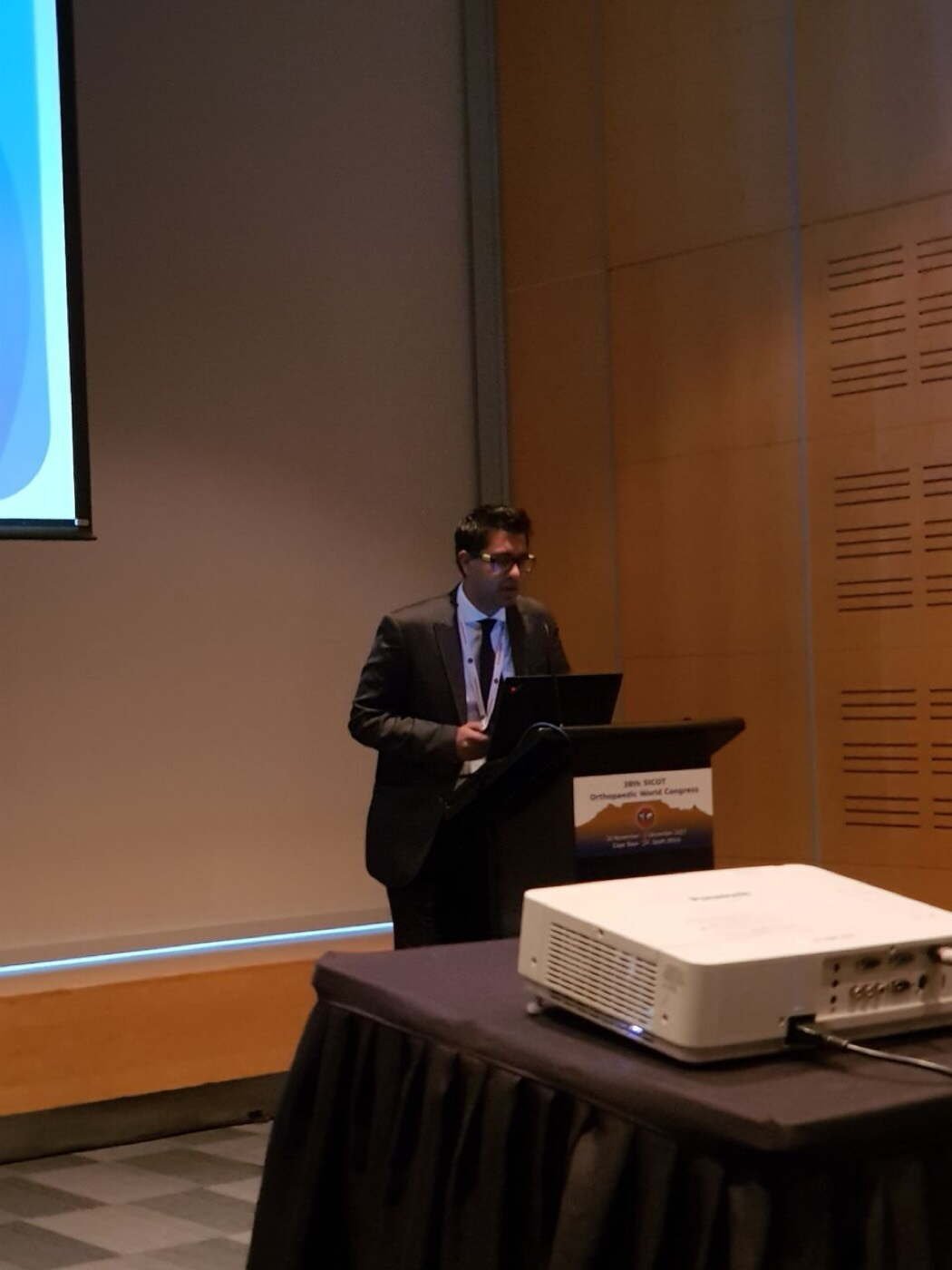
Presenting at the SICOT Orthopaedic World Congress, Cape Town, 2017
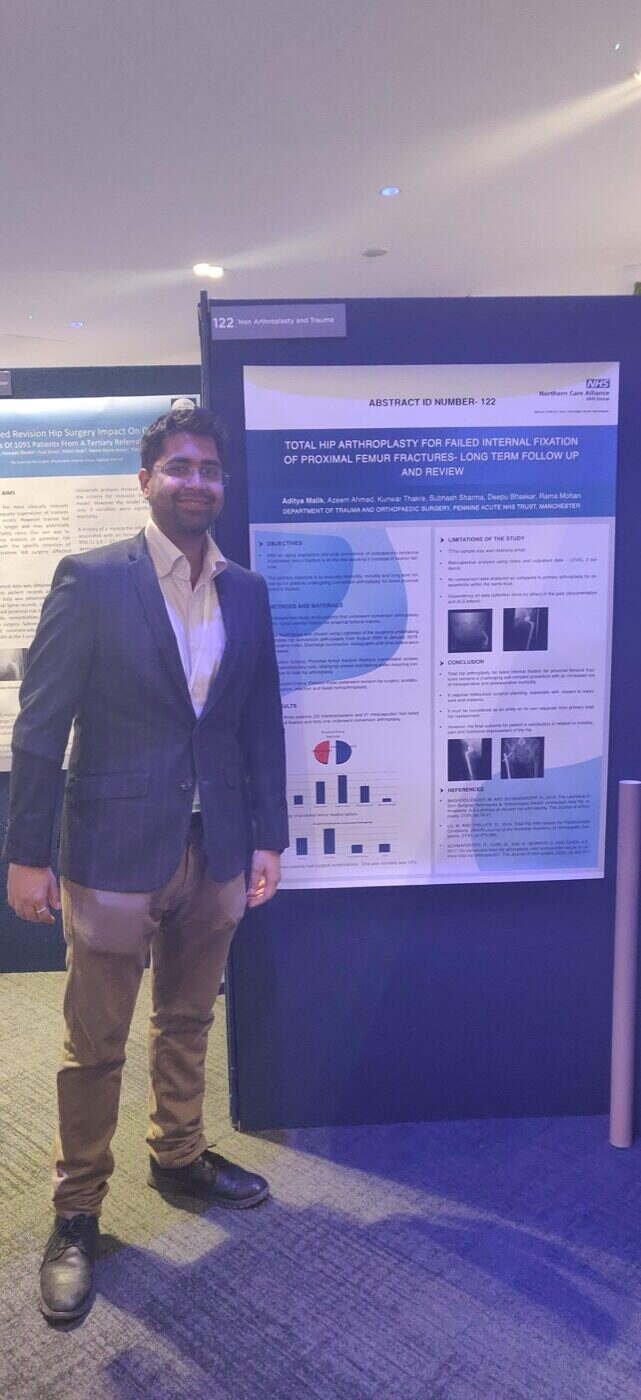
Poster, British Hip Society meeting, Wales, 2020
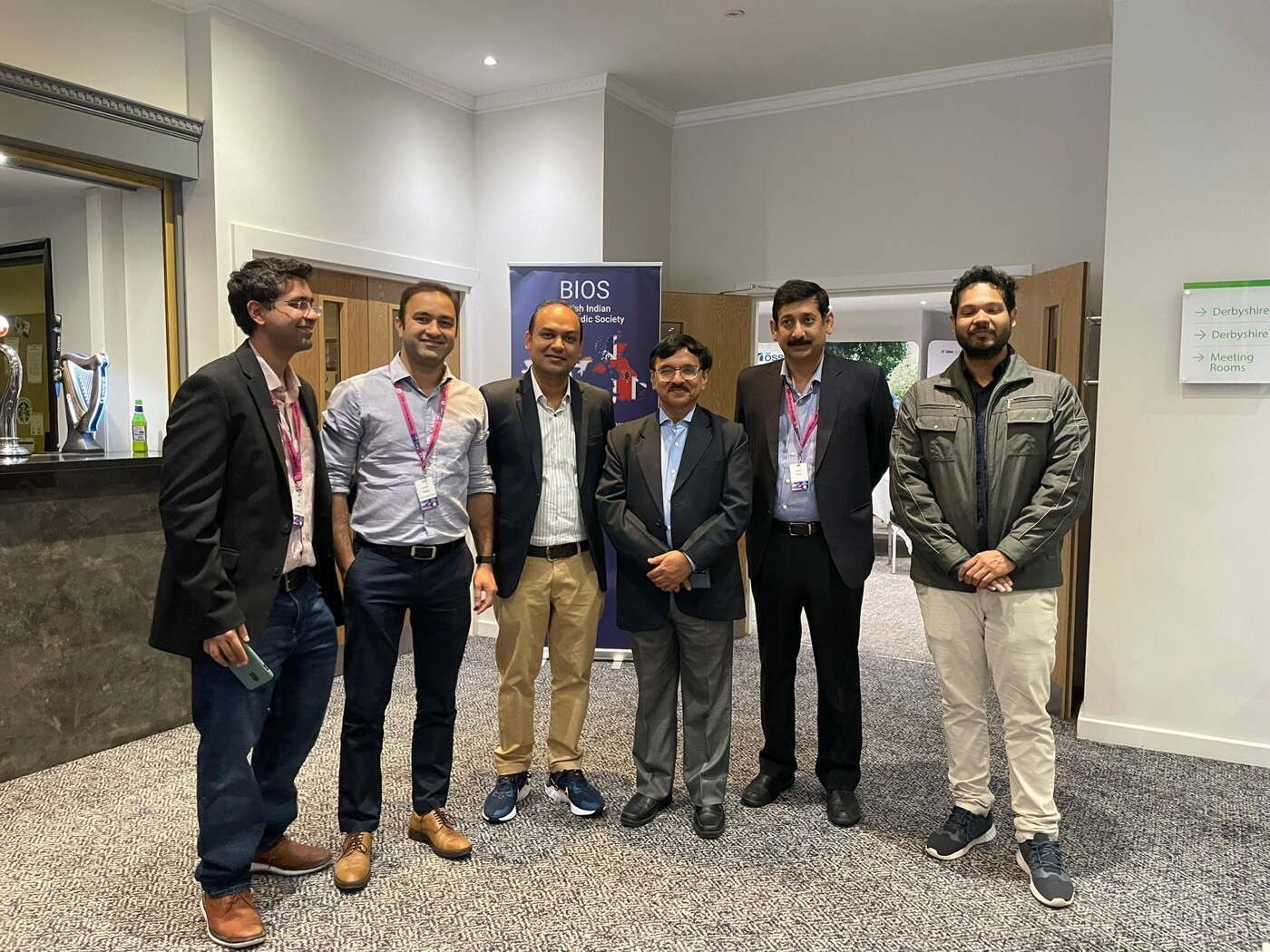
British Indian Orthopaedic Society, 2022
Fifty-odd courses, and the reason for each one
Orthopaedic technique changes faster than most people outside the speciality realise. An implant design, a fixation principle or an approach that was standard a decade ago is often no longer the best available option. Staying current is not optional, and it does not happen by reading alone. It happens in cadaveric labs, instructional courses and faculty-led workshops where the technique is actually practised.
Dr Malik has completed more than fifty accredited courses and workshops. The upper limb strand runs from the Advanced Shoulder Arthroscopy Instructional Course and the Nice Shoulder Course through to elbow arthroplasty at BESS, the Wrightington case-based shoulder and elbow trauma course, the Arthrex fellows’ forum, and the Mayo Clinic elbow course. The arthroplasty strand covers the AO Recon principles of total hip and knee replacement, Stryker Mako robotic certification in Glasgow, the International Masters Anterior Approach course, and hip registrar training with DePuy Synthes.
A third strand is trauma and the fundamentals: AO basic principles, Advanced Trauma Life Support as a provider and again at reverification, pelvi-acetabular fixation, Ilizarov and deformity correction, and wrist and hand fracture fixation at the Pulvertaft Hand Centre and BSSH.
The fourth strand is the one that tends to get overlooked. Surgery is not only technical. Dr Malik has completed NOTSS (Non-Technical Skills for Surgeons), advanced communication skills training, leadership and management workshops, and Good Clinical Practice certification. He has also taught on the Cardiff OSCE course for MRCS candidates rather than only attending it.
The pattern matters more than the count. Courses were chosen to deepen two specialisms rather than to accumulate certificates across everything at once.
- Shoulder & elbow arthroscopy
- Elbow arthroplasty
- Robotic arthroplasty
- Anterior approach hip
- AO trauma
- ATLS provider
- NOTSS
- Course faculty
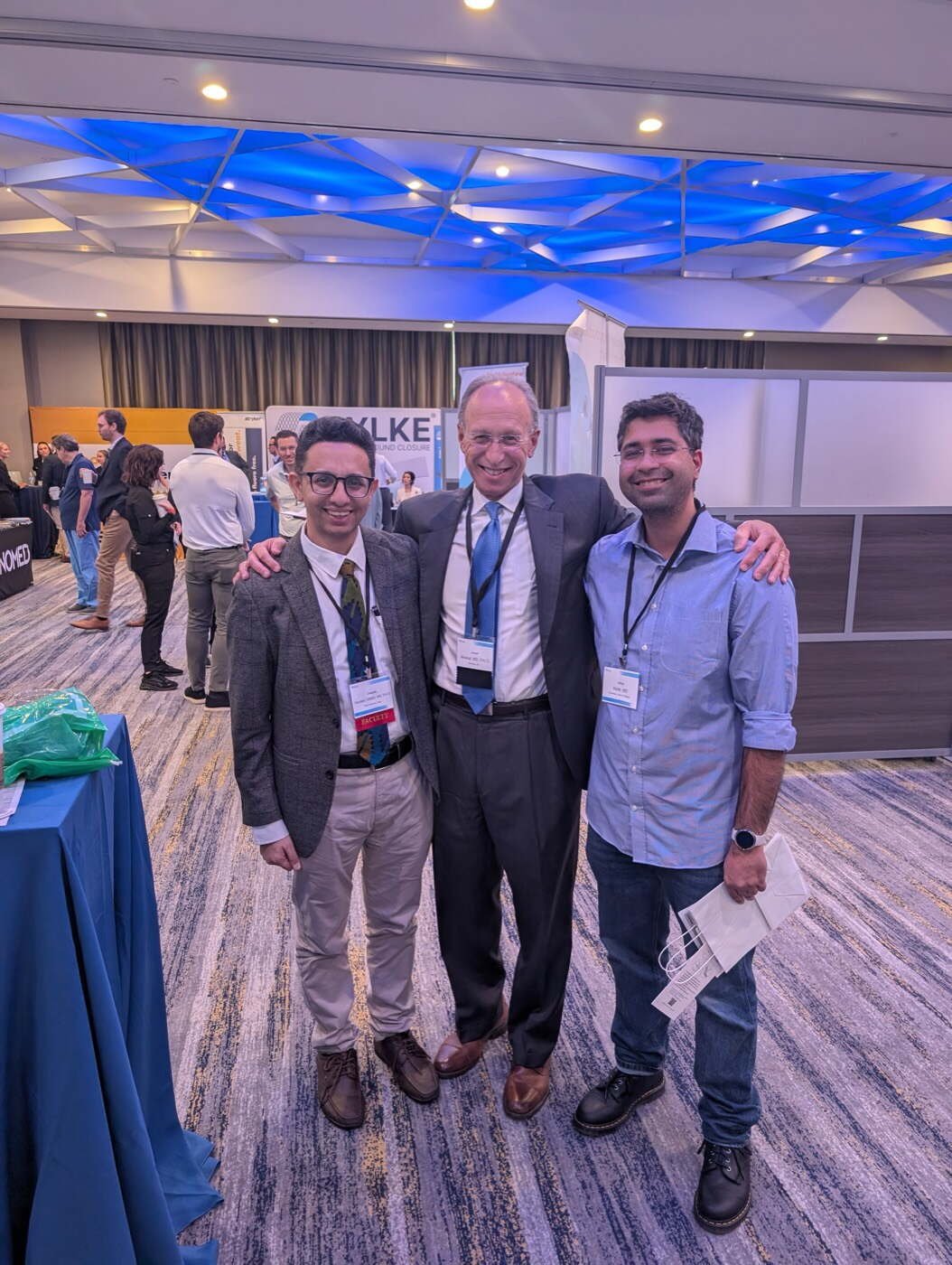
With Dr Deepak Gautam and Professor Joseph Moskal at the anterior hip course, Houston
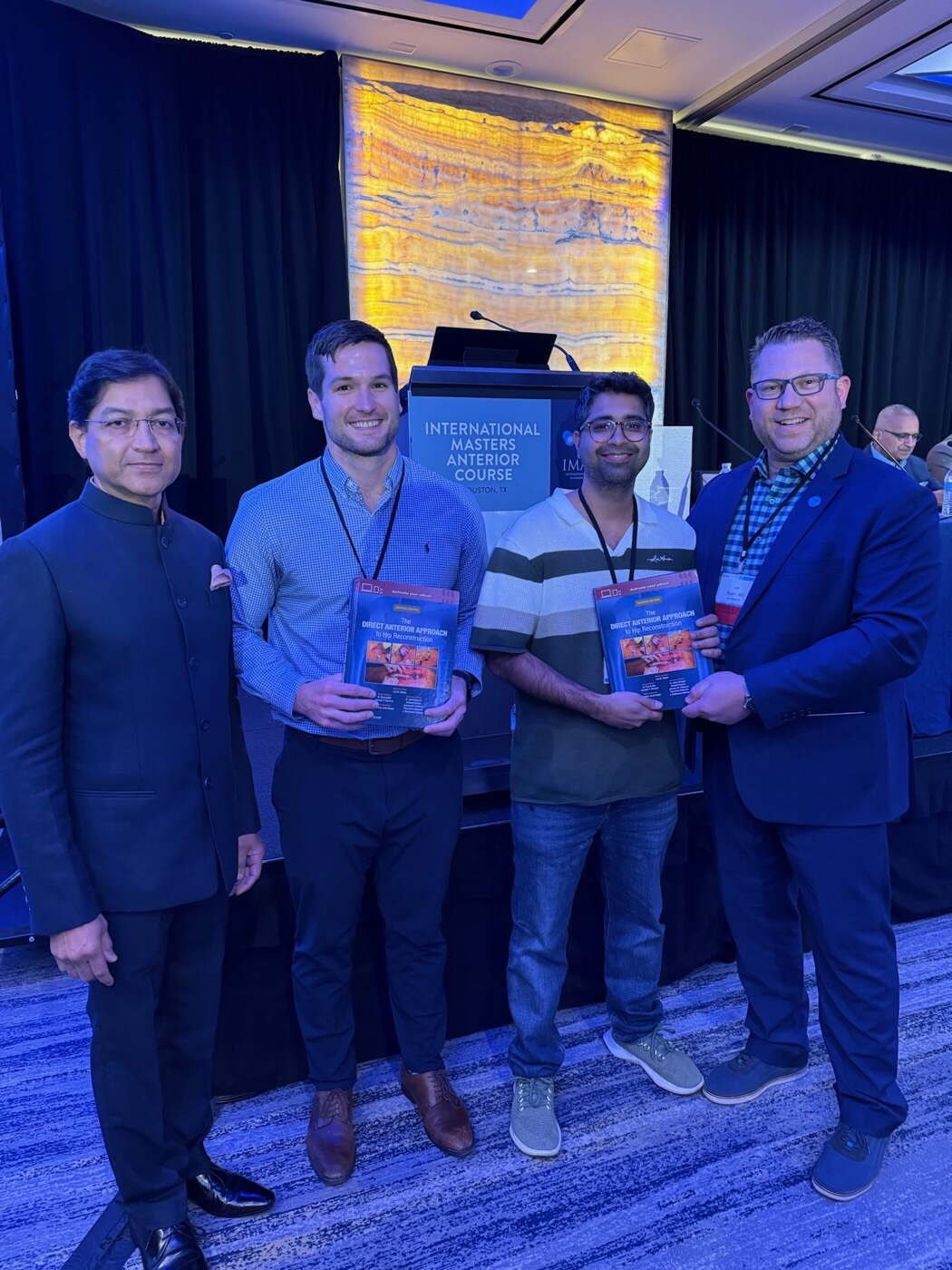
Receiving the direct anterior approach textbook from its author, Dr Lee Rubin
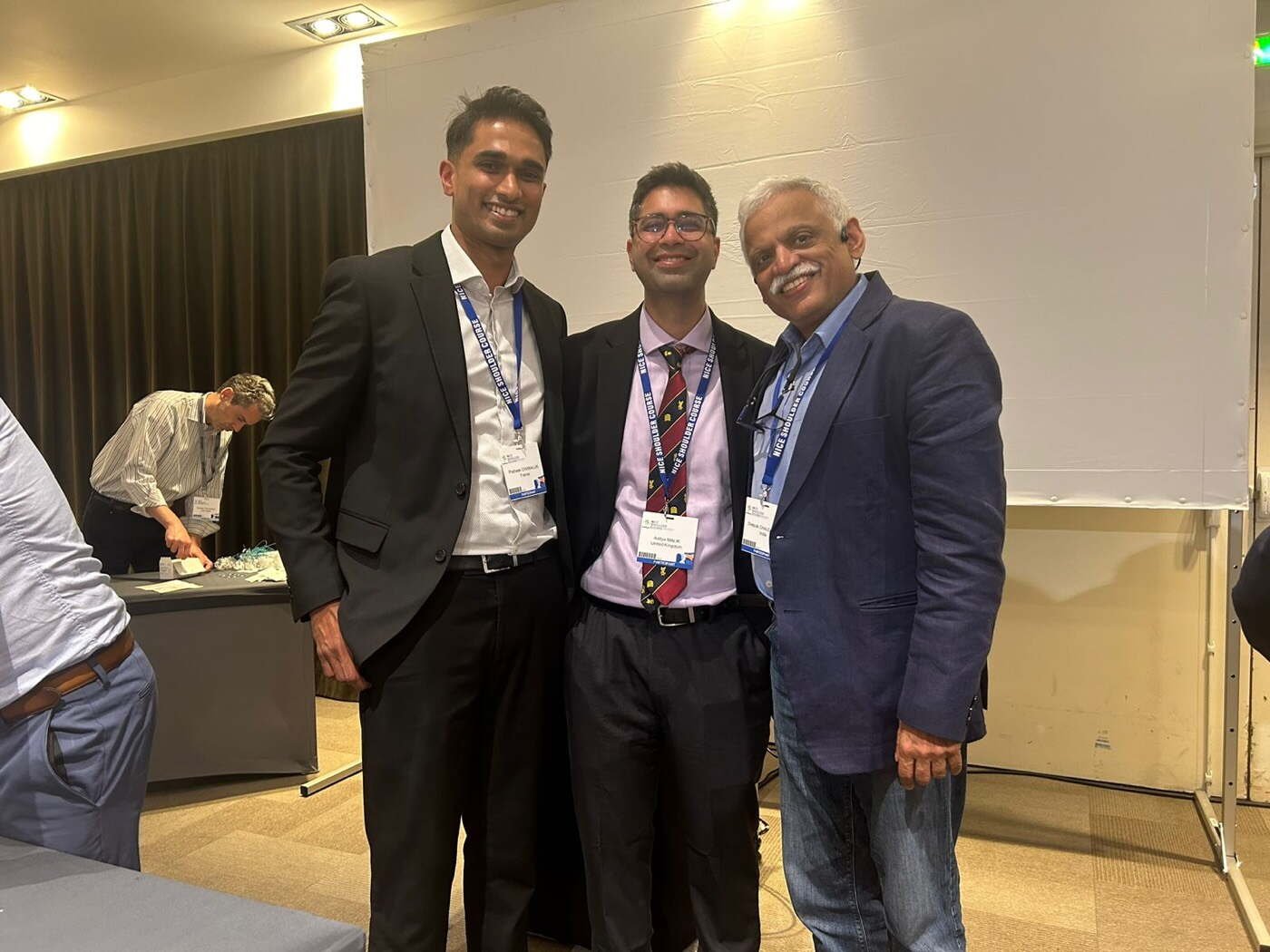
Nice Shoulder Course 2024, with Dr Prateek Chikkalur and Dr Deepak Joshi
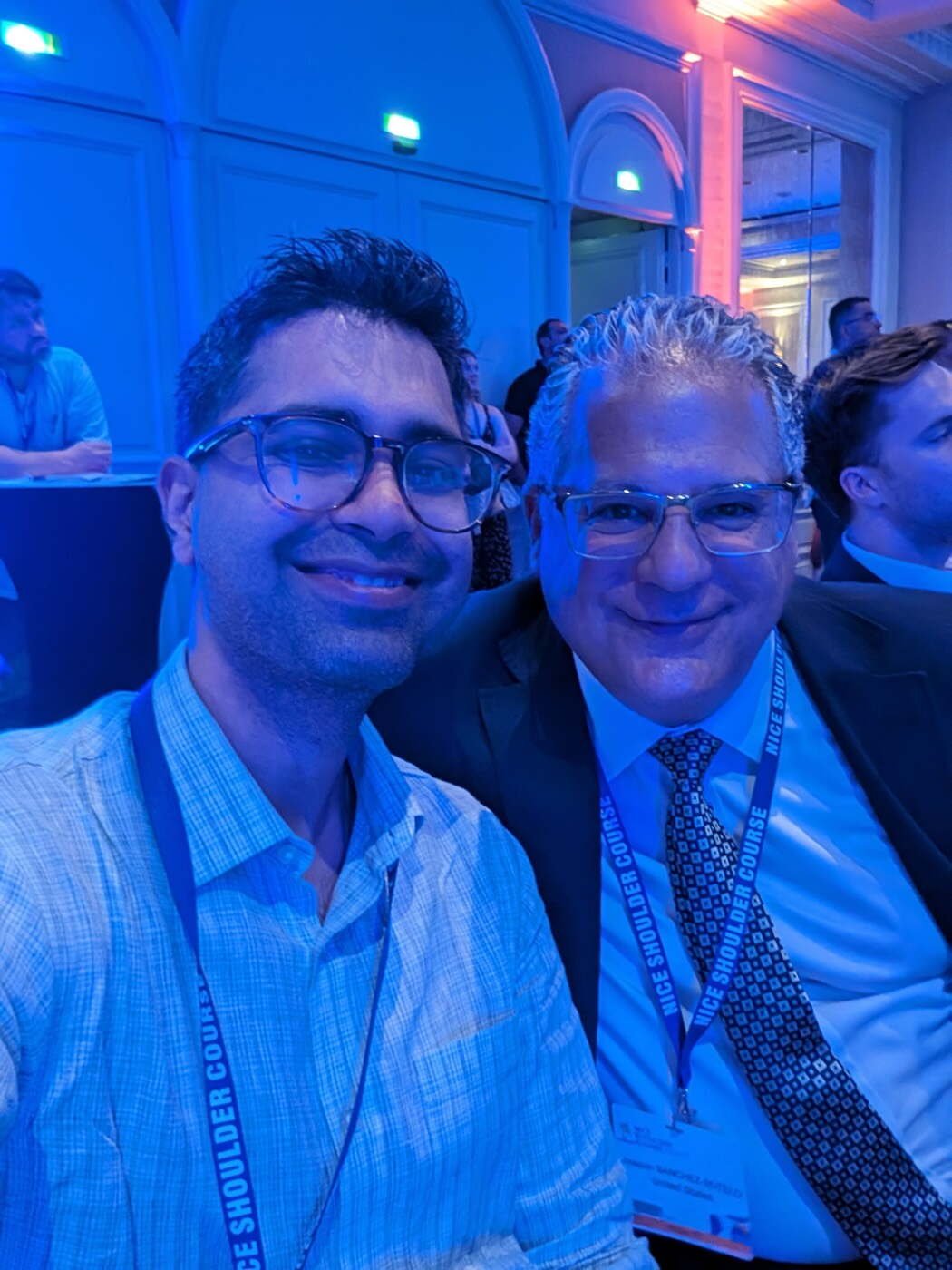
With Professor Joaquin Sanchez-Sotelo at Nice, June 2024
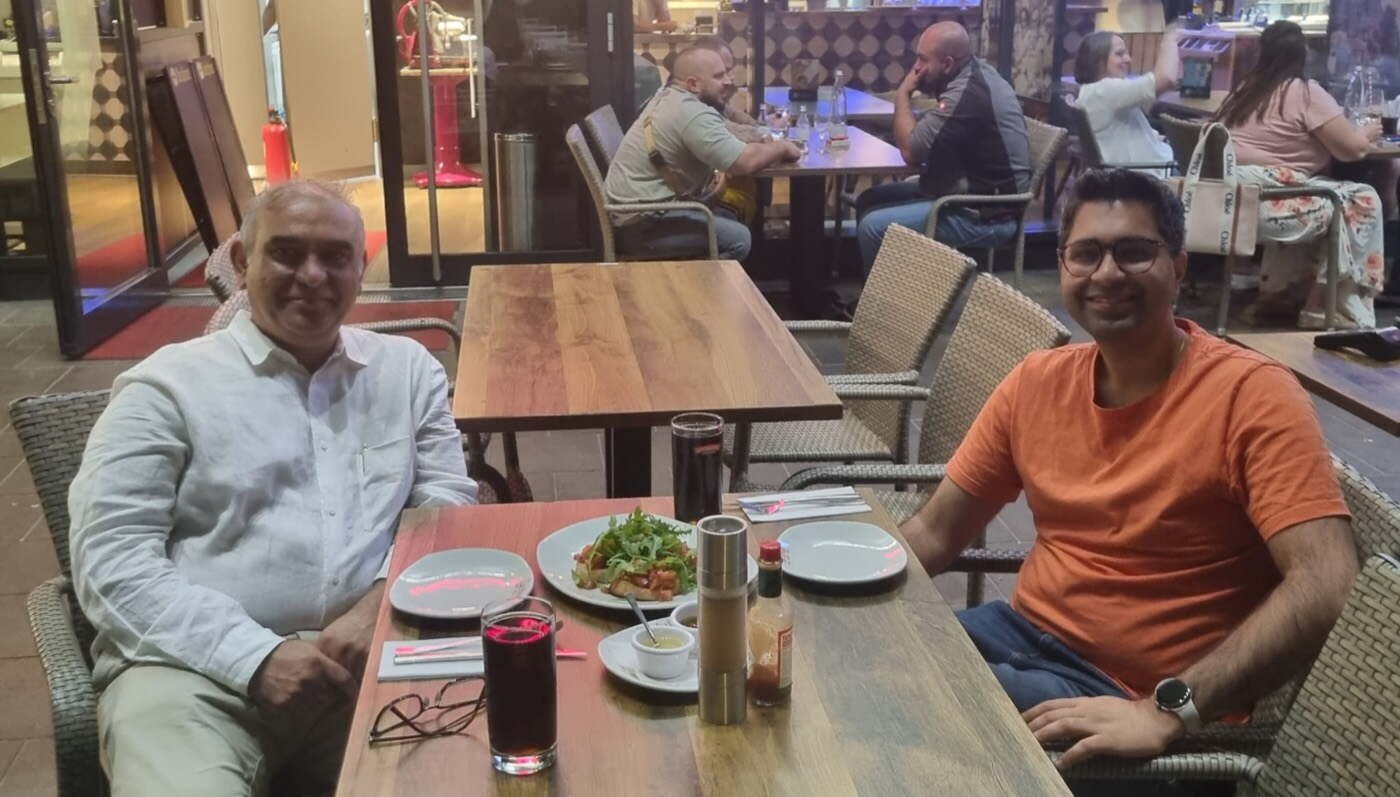
With Dr Arpit Jariwala, consultant upper limb surgeon, Dundee
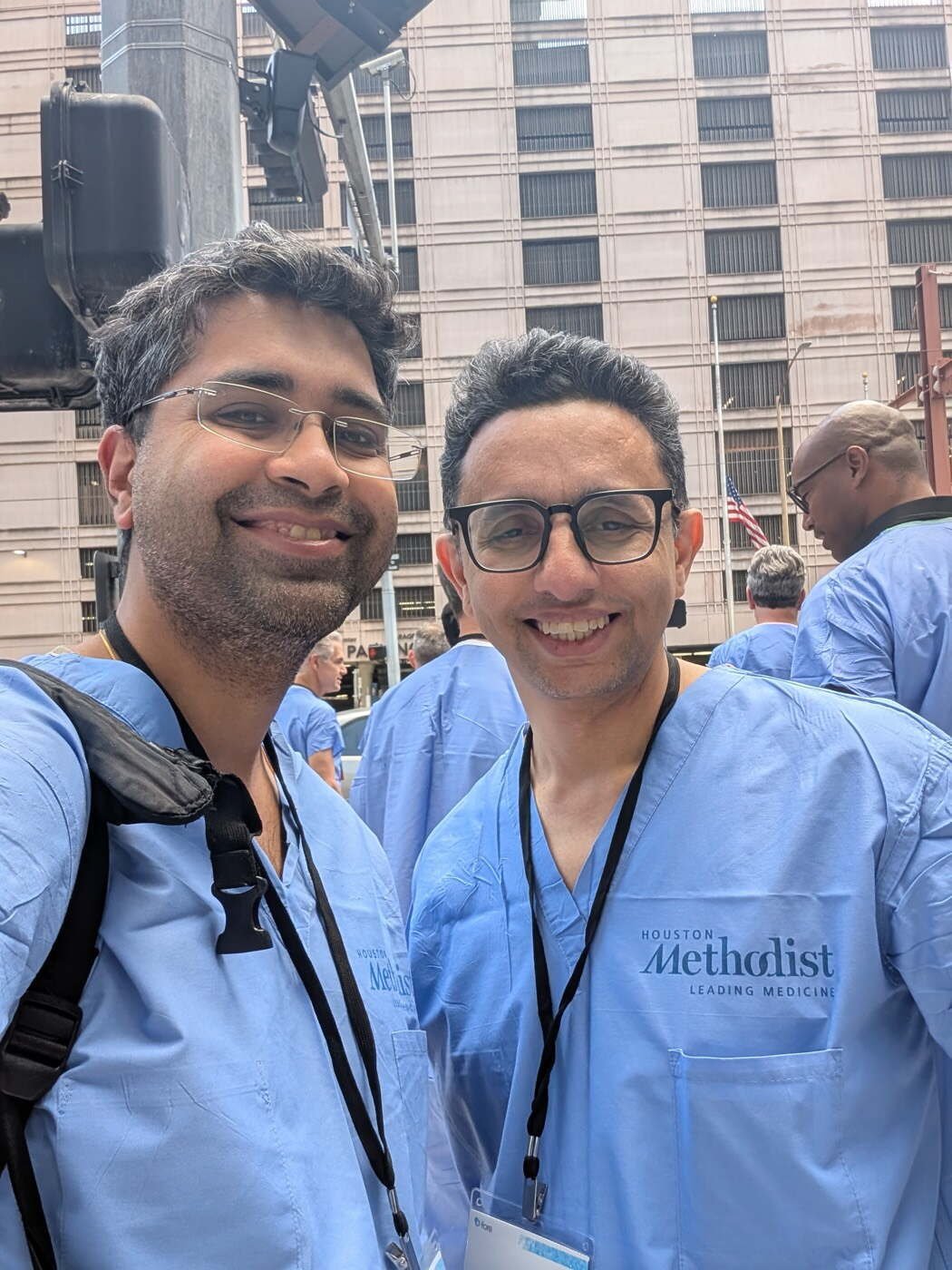
Cadaveric laboratory, Houston

Arthrex, Solihull
Memberships
- ISKSAA (Life Member)
- Delhi Orthopaedic Association (Life Member)
- Indian Orthopaedic Association (Life Member)
- Shoulder and Elbow Society of India (Life Member)
- British Indian Orthopaedic Society (Life Member)
- SICOT (Active Member)
- British Orthopaedic Association
- British Elbow & Shoulder Society
- Global Elbow Network
- Royal College of Surgeons of Edinburgh
Referring a patient?
Colleagues are welcome to make direct contact to discuss a case, or to arrange an expedited appointment for a patient.